Basic Research That Shaped the Future

Today's generative AI has become commonplace,
thanks in part to pioneering research fields established by ATR.

ATR is a research and development organization founded in 1986. From a time when no market yet existed, ATR looked ahead to future technology fields and, through long-term basic research, laid the foundations for new industries and social value.

For example, long before home Internet access and smartphones became commonplace, ATR conducted pioneering basic research in areas such as optical inter-satellite communications, automatic speech translation by telephone, At the time, these basic research projects had no clear path to practical application, but today they have become indispensable assets to modern society.

1987 —

Pioneering Optical Inter-Satellite Communications

Paper: Present Status of Optical ISL Studies in Japan

Venue: Optical & Optoelectronic Appl. Sci. Eng. Symp., The Hague, 1987.

Current Applications

Optical inter-satellite communication, which connects satellites using lasers, has become a core technology for low-Earth-orbit satellite constellations. A representative example is Starlink, whose satellites are equipped with space lasers for optical inter-satellite links, forming a high-speed network that connects satellites with one another. This technology is expanding into next-generation communication services that are less dependent on terrestrial infrastructure, including disaster communications, broadband for remote areas, and communications for aircraft and maritime applications.

  • Starlink
  • Starlink Direct to Cell
  • Low-Earth-Orbit Satellite Internet
  • Satellite Constellations
  • Space Laser Communications
  • Disaster Communications
  • Broadband for Remote Areas
  • Communications for Aircraft and Maritime Applications
1988 —

CNN-Based Speech Recognition

Paper: Phoneme Recognition: Neural Networks vs. Hidden Markov Models

Venue: ICASSP-88, 11-14 April 1988.

Current Applications

Research on phoneme recognition and neural-network-based speech processing has led to today's speech recognition, automatic transcription, speech translation, and voice assistant technologies. Representative examples include Whisper, ChatGPT Voice Mode, Siri, Alexa, and Google Voice Typing, where technologies are used to understand speech, convert it into text, and support dialogue, translation, and automatic meeting transcription.

  • Whisper
  • ChatGPT Voice Mode
  • ChatGPT Voice Input
  • Google Voice Typing
  • Siri
  • Alexa
  • Automatic Transcription
  • Real-Time Captions
  • Speech Translation
  • AI Meeting Minutes

1989 —

Universal Approximation Theorem

Paper: On the Approximate Realization of Continuous Mappings by Neural Networks

Venue: Neural Networks, Vol.2, pp.183–192, 1989.

Current Applications


Systems such as generative AI can be regarded as functions that transform inputs into outputs. The Universal Approximation Theorem demonstrates that there exists a neural network capable of approximating such functions to any desired degree of accuracy, inspiring researchers by showing that the long-running research "marathon" in this field of engineering has a reachable goal.

  • ChatGPT
  • GPT-4o
  • Generative AI
  • AI Image Generation
  • AI Speech Recognition
  • Autonomous Driving AI
  • Medical Image Analysis
  • AI Recommendation Systems
  • Anomaly Detection AI
  • Demand Forecasting AI

1994 —

Artificial Life

Paper: An Evolutionary Approach to Synthetic Biology: Zen and the Art of Creating Life

Venue: Artificial Life 1(1/2): 195–226. MIT Press.

Current Applications

Research on artificial life and evolutionary approaches has expanded from Soft ALife, which seeks to understand biological evolution, adaptation, and emergence through computer simulation, to robotics and physical systems (Hard ALife) and chemical life (Wet ALife).

  • Cellular Automata
  • Evolutionary Computation
  • Tierra
  • Avida
  • Boids
  • Evolutionary Robotics
  • Swarm Robotics
  • Self-Organizing Robots
  • Artificial Cells
  • Protocells
  • DNA Computing
  • Synthetic Biology

Three Research Areas Supporting Our Growth Strategy (PICKUP)

Brain Information Science PICKUP

Understanding the brain, connecting it with machines, and applying that knowledge to AI and social systems

Brain Information and Communications Research Laboratories

https://bicr.atr.jp/en/

ATR's Brain Information Science research is based on understanding brain function and aims to create innovative technologies that support human augmentation, next-generation medicine, AI, and robotics.

The Computational Neuroscience Laboratories (CNS) develop brain information decoding technologies and brain-machine interfaces (BMI) that interpret thoughts and intentions from brain activity. They also conduct research on Decoded Neurofeedback-based therapies, brain-controlled robotics, and the scientific understanding of consciousness and qualia.

The Cognitive Mechanisms Laboratories (CMC) investigate higher cognitive functions such as learning, decision-making, and communication, applying the findings to education, healthcare, human interfaces, and social systems.

The Neuroinformatics Laboratories (NIA) analyze brain activity using statistical science and machine learning, integrate diverse brain measurement data to uncover the principles of brain information processing, and pursue next-generation AI inspired by neuroscience.

Through these research activities, ATR is advancing from understanding the brain to integrating the brain with machines, and further applying that knowledge to medicine, AI, robotics, and social systems, contributing to a future society in which humans and machines enhance one another through collaboration.

Brain Information Science PICKUP Image

KEYWORD MAP

Research Keywords in Brain Information Science

By decoding brain activity and understanding the mechanisms of cognition, learning, behavior, and perception, we aim to apply these findings to BMI, robot control, healthcare, welfare, and next-generation communication technologies.

Technologies for Understanding the Brain
  • Brain Information Science
  • Brain Activity Measurement
  • Brain Signals
  • Brain Information Decoding
  • Decoding
  • Brain Function
  • Neuroinformatics
  • Computational Neuroscience
  • Dynamic Brain Imaging
  • Brain Information Analysis
Research on Human Cognition
  • Cognitive Mechanisms
  • Cognitive Neuroscience
  • Higher Brain Functions
  • Cognition and Learning
  • Decision-Making
  • Psychological Experiments
  • Neurofeedback
  • Mathematical Intelligence
  • Qualia
  • Information Structure
Technologies Connecting the Brain and Machines
  • BMI
  • Brain-Machine Interface
  • Brain-Robot Interface
  • Robot Learning
  • Robot Control
  • Recovery of Physical Functions
  • Prosthetics
  • Functional Compensation
  • Communication Support
Applications in Society and Healthcare
  • Behavior Change
  • DecNef
  • Medical Applications
  • Clinical Applications
  • Psychiatry
  • Machine Learning
  • Large-Scale Computing
  • ICT Technologies
  • Next-Generation Communication
  • Human-Centered Interfaces
01 / 02

Human Augmentation × AI PICKUP

Toward a Society Where Humans and Avatars Coexist

Deep Interaction Research Laboratories

https://dil.atr.jp/

Through research on Cybernetic Avatars (CA), which enable people to operate robots in remote locations or avatars in virtual environments as their own alter egos and perform activities through them, we aim to realize a society in which humans, robots, and avatars naturally coexist.

By integrating AI, robotics, cognitive science, and communication science, we investigate the mechanisms of communication and collaboration between humans and robots.

At the ISL, we study the principles of human–robot interaction and Cybernetic Avatar technologies, while the Hiroshi Ishiguro Laboratories develop human-symbiotic androids.

Furthermore, the ITB promotes collaborative research and real-world deployment with industry partners, while the GOL advances the global dissemination and societal deployment of research outcomes through international collaborative research and Open Labs.

©FUTURE OF LIFE

Human Augmentation × AI PICKUP Image

KEYWORD MAP

Research Keywords in Human Augmentation × AI

Toward a future society in which people, AI, robots, avatars, and dialogue systems are deeply interconnected, we conduct integrated research on human augmentation, embodiment, cognition, emotion, and social interaction.

Research for Understanding Humans
  • Human Understanding
  • Cognition
  • Emotion
  • Embodiment
  • Sociality
  • Behavior Understanding
  • Intention Estimation
  • Psychological Models
  • Interpersonal Communication
  • The Nature of Human Society
AI and Intelligent Technologies
  • AI
  • Generative AI
  • Conversational AI
  • Machine Learning
  • Intelligent Systems
  • Recognition Technologies
  • Behavior Generation
  • Adaptive Learning
  • Autonomous Systems
  • Human-Centered AI
  • Human-AI Co-Creation
Robotics and Avatar Technologies
  • Robotics
  • Humanoids
  • Androids
  • Avatars
  • Telepresence
  • Human Augmentation
  • Teleoperation
  • Humanoid Robots
  • Human-Robot Coexistence
  • Cybernetic Avatars
  • Connectivity Robots
  • Cloud Network Robots
  • Real-world Deployment
Deep Interaction
  • Interaction
  • Dialogue
  • Empathy
  • Trust Building
  • Next-Generation Communication
  • Open Lab
  • Interaction Services
  • Moral Interaction
  • Social Touch
  • Art & Science
02 / 03

Wireless & Communications PICKUP

Building the Neural Network of Future Society

Wave Network Research Laboratories

https://wnl.atr.jp/english/

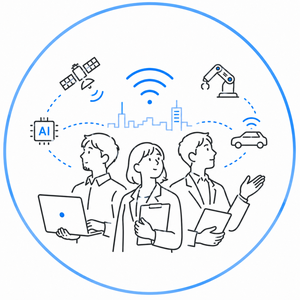
Guided by the vision of "From research that connects radio waves to research that connects people and society," the Wave Network Research Laboratories are dedicated to creating the communications and sensing infrastructure that will serve as the neural network of future society. In the future, AI-powered robots, autonomous vehicles, drones, IoT devices, and virtually everything else will be connected through networks. Achieving this vision requires not only high-speed communications, but also radio sensing technologies that detect the presence, location, and condition of people and objects, wireless harness and wireless power transfer technologies that eliminate wiring inside and outside electronic devices,

and spectrum creation technologies that maximize the utilization of limited frequency resources.

By integrating radio technologies, communications, sensing, and AI, we are building a future society in which people, robots, mobility, and the environment are connected and collaborate in real time. Through the real-world deployment of our research outcomes, we contribute to the realization of a safe, secure, sustainable, and resilient society.

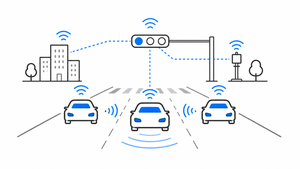
Autonomous Driving

Autonomous Driving

Communication among vehicles, roads, and traffic signals.

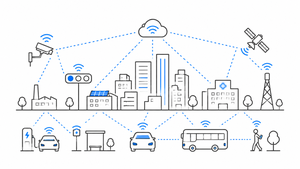
Smart City

Smart City

Citywide Real-Time Connectivity.

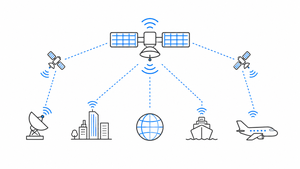
Space Communications

Space Communications

Next-Generation Satellite Networks.

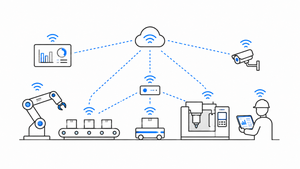
Smart Factory DX

Smart Factory DX

Ultra-Low-Latency Wireless Communications in Factories.

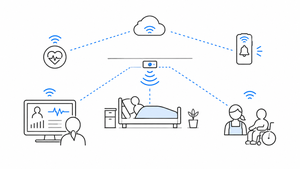
Healthcare & Elderly Care

Healthcare & Elderly Care

Contactless Monitoring Through Sensing.

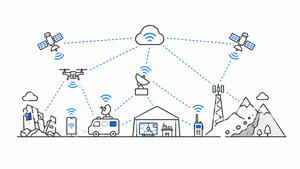
Disaster Prevention

Disaster Prevention

Maintaining Network Connectivity During Disasters.

KEYWORD MAP

Technology Keywords of the Wave Network Research Laboratories

By integrating wave engineering, wireless communications, networking, and security technologies, we aim to create innovative network-edge solutions that support an AI-driven society.

Wave-Based Technologies
  • Wave Technology
  • Wave Technologies
  • Radio Waves
  • Acoustic Waves
  • Light
  • Wave Engineering
  • Sensing
  • Radio Sensing
Connectivity Technologies
  • Networking
  • Wireless Communications
  • Communication Technologies
  • End-to-End Communications
  • Network Edge
  • Edge Computing
  • Services
  • Value-Added Services
Technologies for Security and Reliability
  • Security
  • Network Security
  • Reliable Communications
  • Reliability
  • Safety
  • Social Infrastructure
Applications for an AI-Driven Society
  • AI-Driven Society
  • Solutions
  • Network Solutions
  • Social Challenges
  • Diverse Challenges
  • Service Creation
  • Future Society
03 / 03

Transforming Research Outcomes into Sustainable Social and Industrial Value

ATR's Value Creation Model

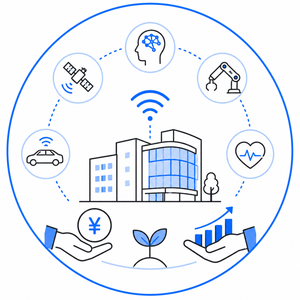
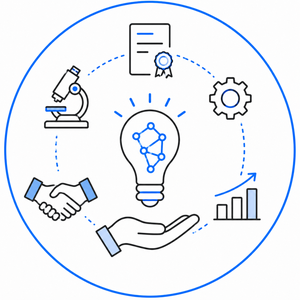
ATR builds advanced technology platforms that support next-generation society by integrating diverse research fields—including AI, communications, neuroscience, and robotics—on the foundation of long-term basic research. The intellectual property, algorithms, data, and research expertise generated through our research evolve beyond individual technologies into cross-disciplinary technology platforms that create new value through interdisciplinary integration.

Furthermore, through co-creation with companies, local governments, and research institutions, ATR promotes collaborative research, Proofs of Concept (PoCs), and demonstration projects to validate the practicality, safety, and social acceptance of emerging technologies, thereby accelerating the real-world deployment of research outcomes. Through these efforts, ATR advances commercialization in a variety of forms—including patent licensing, technology transfer, startup creation, and joint ventures—with the goal of generating sustainable economic and social value.

From research to industry. From technology to society. ATR is building an innovation ecosystem that supports the future of society.


Commercialization and Licensing of Research Outcomes

Learn about the ATR Group's operating companies, licensing businesses, and startup initiatives. View Case Studies →

Value Creation PICKUP

Connecting cutting-edge technologies through global co-creation, opening the markets of the future.

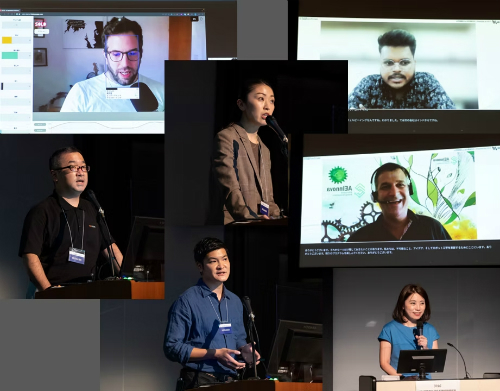
KGAP+ is a program based in Keihanna Science City that connects outstanding startups from around the world with the Japanese market.

Working closely with leading innovation organizations in Japan and abroad, KGAP+ identifies startups with cutting-edge technologies. We provide practical hands-on support with a strong commitment through Proofs of Concept (PoCs) conducted in collaboration with major Japanese companies. By leveraging the expertise of an extensive mentor network, we accelerate collaborative development and commercialization aimed at market deployment.

Through open cross-border co-creation, we promote the creation of new industries that address the diverse challenges facing companies and society while supporting the future of society.

Value Creation PICKUP Image

KEYWORD MAP

Value Creation Keywords of KGAP+

A value creation framework that connects overseas startups, the Japanese market, business partners, mentors, and Keihanna Science City, transforming research outcomes and advanced technologies into real-world real-world deployment.

Global Collaboration
  • Overseas Startups
  • Japanese Market
  • Global Expansion
  • International Collaboration
  • Keihanna Science City
  • Global Partnership
Commercialization Support
  • Acceleration
  • Business Partner Discovery
  • Market Access
  • Growth Opportunities
  • Mentoring
  • Expert Network
Open Innovation
  • Co-Creation
  • Industry Collaboration
  • Technology Implementation
  • PoC
  • Matching
  • New Business Creation
Social & Industrial Value
  • Solving Social Challenges
  • Industrial Competitiveness
  • Next-Generation Markets
  • Sustainable Growth
  • Business Value Creation
  • Innovation Ecosystem

ATR IN NUMBERS

ATR Research Assets by the Numbers

ATR's decades of accumulated research outcomes, intellectual property, and collaborative research networks form the foundation of a value creation ecosystem that creates future markets.

These research assets are more than simply past achievements. Through technology platforms, co-creation, and commercialization, they are transformed into sustainable social and industrial value.

VALUE CREATION ECOSYSTEM

A Value Creation Model That Cycles from Research Assets to Real-world deployment

01

Research Assets

  • Basic Research
  • Intellectual Property
  • Data
  • Research Talent
  • AI Technologies

02

Technology Platforms

  • AI
  • Communications
  • Neuroscience
  • Robotics
  • Sensing

03

Co-Creation & Industry Collaboration

  • Industry Collaboration
  • Collaborative Research
  • PoC
  • Demonstration Projects

04

Commercialization & Real-world deployment

  • Licensing
  • Technology Transfer
  • Startups
  • Joint Ventures

05

Sustainable Value Creation

  • Social Value
  • Industrial Competitiveness
  • Sustainable Revenue
  • Next-Generation Markets

The knowledge, challenges, and revenue generated through real-world deployment are fed back into the next cycle of basic research, enabling ATR's value creation ecosystem to continue evolving in a sustainable cycle.

Latest Information

News

Loading...

Events

Build the Future with ATR

Through research, business, investment, and co-creation, join us in building the next-generation society.